“Un viaje al altar que nunca olvidarás.”
Mamma Mia! La película
Versión cinematográfica del popular musical de ABBA. Una joven que ha crecido en una pequeña isla griega, ha sido educada por una madre rebelde y poco convencional, que siempre se ha negado a revelarle la identidad de su padre. Cuando, por fin, parece que la joven está a punto de saberlo, aparecen tres posibles candidatos.
Dirección
Phyllida Lloyd
Guion
Catherine Johnson
Estreno
2008-07-03
Duración
110 min
Clasificación
A
Presupuesto
$52M
Recaudación
$610M
Idiomas
English, ελληνικά
Dónde verlo
Incluido en suscripción

Alquiler




Compra
Datos de JustWatch vía TMDB · Disponibilidad en España
Parte de la saga
¡Mamma Mia! - Colección
Sinopsis
Versión cinematográfica del popular musical de ABBA. Una joven que ha crecido en una pequeña isla griega, ha sido educada por una madre rebelde y poco convencional, que siempre se ha negado a revelarle la identidad de su padre. Cuando, por fin, parece que la joven está a punto de saberlo, aparecen tres posibles candidatos.
Temas
Reparto principal
16 actores
Amanda Seyfried
Sophie Sheridan
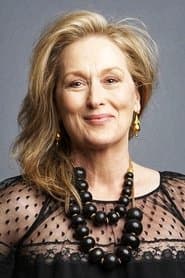
Meryl Streep
Donna Sheridan

Pierce Brosnan
Sam Carmichael

Colin Firth
Harry Bright

Stellan Skarsgård
Bill Anderson

Christine Baranski
Tanya Chesham-Leigh

Julie Walters
Rosie Mulligan

Dominic Cooper
Sky Rymand

Niall Buggy
Father Alex

Ashley Lilley
Ali

Rachel McDowall
Lisa

Chris Jarvis
Eddie

Philip Michael
Pepper

Juan Pablo Di Pace
Petros

Enzo Squillino Jr.
Gregoris

Ricardo Montez
Stavros
Reseñas
Marco-Hugo Landeta Vacas
agosto de 2026
(CASTELLANO) Quien haya leído alguna de mis críticas probablemente ya sabe que tengo un problema con los musicales. No puedo con ellos. Y no es una cuestión de prestigio, tradición o calidad. Sé perfectamente que existen musicales extraordinariamente importantes, que Broadway lleva décadas llenando teatros y que *Mamma Mia!* fue un fenómeno enorme antes incluso de convertirse en película. Me da igual. Nunca he ido a un musical ni en el Broadway madrileño ni en el neoyorquino por una razón bastante sencilla: no me gustan. Hay algo en el mecanismo básico del género que me expulsa inmediatamente. Dos personajes están hablando, ocurre cualquier cosa y, de repente, alguien empieza a cantar. Después canta otro. Luego bailan. Y todo el mundo parece aceptar que esa es una forma completamente normal de continuar una conversación. Yo no puedo. Y *Mamma Mia!* convierte precisamente eso en su razón de existir. La película de Phyllida Lloyd adapta el musical construido alrededor de las canciones de ABBA, así que pedirle que no haga exactamente eso sería absurdo. El problema es que ABBA tampoco ha sido nunca santo de mi devoción. No me atraen. Me aburren. Así que juntar uno de los géneros que menos soporto con un grupo cuya música nunca me ha interesado era probablemente la peor combinación posible. Y efectivamente lo fue. Desde prácticamente el principio estaba deseando que terminara. La historia importa poquísimo porque está construida fundamentalmente para encontrar la siguiente excusa que permita introducir otra canción. Los personajes hablan hasta que llega el momento de cantar, cantan, la película vuelve brevemente a la narración y empieza a preparar la siguiente. Para quien disfrute de esas canciones, supongo que ahí está la fiesta. Para mí fue agotador. Y es curioso porque sobre el papel hay elementos que deberían resultar agradables. Está Meryl Streep. Está Amanda Seyfried. Están Pierce Brosnan, Colin Firth y Stellan Skarsgård. Está Grecia. Hay sol. Hay mar. Hay casas blancas. Hay paisajes que cualquier agencia de viajes utilizaría para convencerte de comprar un billete inmediatamente. Nada. No conseguí conectar con absolutamente nada. Ni siquiera Meryl Streep, cuya capacidad como actriz está fuera de toda discusión, puede hacer que ese mundo me resulte creíble. De hecho, verla lanzarse continuamente a números musicales terminó aumentando mi distancia con la película. Y Pierce Brosnan cantando tampoco ayuda precisamente. Pero sería injusto limitar el problema a si unos actores cantan mejor o peor. El problema para mí está mucho antes. No creo en ese universo. No acepto sus reglas. Cuando una emoción que podría expresarse mediante una mirada, un silencio o una conversación se convierte automáticamente en una canción, la película deja de hablarme. Sé que esa es exactamente la gracia del musical. Ahí está nuestra incompatibilidad. *Mamma Mia!* además lo lleva todo hacia una alegría tan permanente, tan luminosa y tan conscientemente artificial que acaba produciéndome el efecto contrario al que busca. Cuanto más intenta contagiarme entusiasmo, más lejos estoy. Los colores. Las coreografías. Las sonrisas. Las canciones. Las islas. Todo debería transmitir felicidad. Yo miraba cuánto quedaba. Eso resume bastante bien mi experiencia. Entiendo perfectamente que millones de personas hayan disfrutado del musical, de la película y de ABBA. No necesito pensar que están equivocadas. Simplemente esta película está hecha para un espectador que no se parece absolutamente en nada a mí. Roger Ebert escribió algo muy sensato sobre ella: que no estaba hecha para él, sino para quienes iban a adorarla. Puedo entender perfectamente esa sensación. Solo que en mi caso la distancia es todavía mayor. Porque no encontré siquiera ese entretenimiento ligero que podría haber compensado mi rechazo al género. No me hicieron gracia sus personajes. No me interesó la historia. No disfruté las canciones. No me sedujo el supuesto encanto mediterráneo. No conseguí agarrarme a nada. Al final, *Mamma Mia!* terminó funcionando casi como una demostración de laboratorio de por qué no me gustan los musicales. Si alguien empieza a cantar sin venir a cuento, ya me cuesta. Si después canta otro, peor. Si además todas las canciones son de ABBA, hemos terminado. Y todavía quedaba casi toda la película. (ENGLISH) Anyone who has read some of my reviews probably already knows that I have a problem with musicals. I simply cannot deal with them. This is not about prestige, tradition or historical importance. I know perfectly well that musical theatre has produced major works, that Broadway has filled theatres for decades, and that *Mamma Mia!* was already a huge phenomenon before becoming a film. It makes no difference to me. I have never gone to a musical in Madrid or New York for a very simple reason: I do not like them. There is something about the basic mechanism of the genre that immediately pushes me away. Two characters are talking, something happens and suddenly one of them starts singing. Then somebody else joins in. Then everyone dances. And the entire fictional world accepts this as a completely natural continuation of the conversation. I cannot. And *Mamma Mia!* makes that mechanism its entire reason for existing. Phyllida Lloyd's film adapts a stage musical constructed around ABBA songs, so criticizing it for doing exactly that would obviously be pointless. The additional problem is that ABBA have never appealed to me either. Their music bores me. Combining one of the genres I enjoy least with a band I have never particularly wanted to hear was therefore probably the worst possible combination. And that is exactly how it felt. Almost from the beginning, I wanted the film to end. The story matters very little because so much of it seems designed primarily to find the next excuse for another song. Characters speak until singing becomes necessary, the number happens, the narrative briefly resumes and preparations begin for the next one. If you love those songs, I imagine that is the pleasure. For me, it was exhausting. What makes the experience slightly strange is that the film contains plenty of elements that should at least be pleasant. Meryl Streep. Amanda Seyfried. Pierce Brosnan, Colin Firth and Stellan Skarsgård. Greek islands. Sunshine. Sea. White houses. Scenery that could sell a holiday on its own. Nothing worked for me. Not even Streep, whose ability as an actress is beyond dispute, can make this universe feel convincing to me. Watching her repeatedly launch into musical numbers only increased my distance from the film. Pierce Brosnan singing does not exactly help either. But reducing the problem to vocal ability would be unfair. My problem begins much earlier. I do not believe in this world. I do not accept its rules. Whenever an emotion that could have been expressed through a look, silence or conversation automatically becomes a song, the film stops speaking to me. I know that is precisely what musical fans love. That is the incompatibility. *Mamma Mia!* pushes everything toward such permanent brightness and deliberately artificial happiness that it eventually has the opposite effect on me. The harder the film tries to transmit joy, the further away I feel. Colors. Choreography. Smiles. Songs. Islands. Everything is designed to feel euphoric. I kept checking how much was left. That probably summarizes my experience better than anything else. I understand perfectly well why millions of people love the stage show, the movie and ABBA. I do not need to believe they are wrong. This film was simply made for a viewer who is almost the complete opposite of me. And unlike some musicals where something else might overcome my resistance to the genre, I found nothing here that could. The characters did not amuse me. The story did not interest me. The songs gave me nothing. Even the Mediterranean setting could not win me over. In the end, *Mamma Mia!* almost became a laboratory demonstration of everything I dislike about musicals. If someone suddenly starts singing, I am already struggling. If another person joins in, things get worse. If every song is ABBA, we are finished. And most of the movie is still left.
Producción